When it comes to choosing the right machinery for construction tasks, understanding the specific advantages of different equipment is crucial. Industry expert John Doe, a renowned equipment analyst, emphasizes, "What is the difference between a skid steer and a track loader? It's all about versatility and performance."
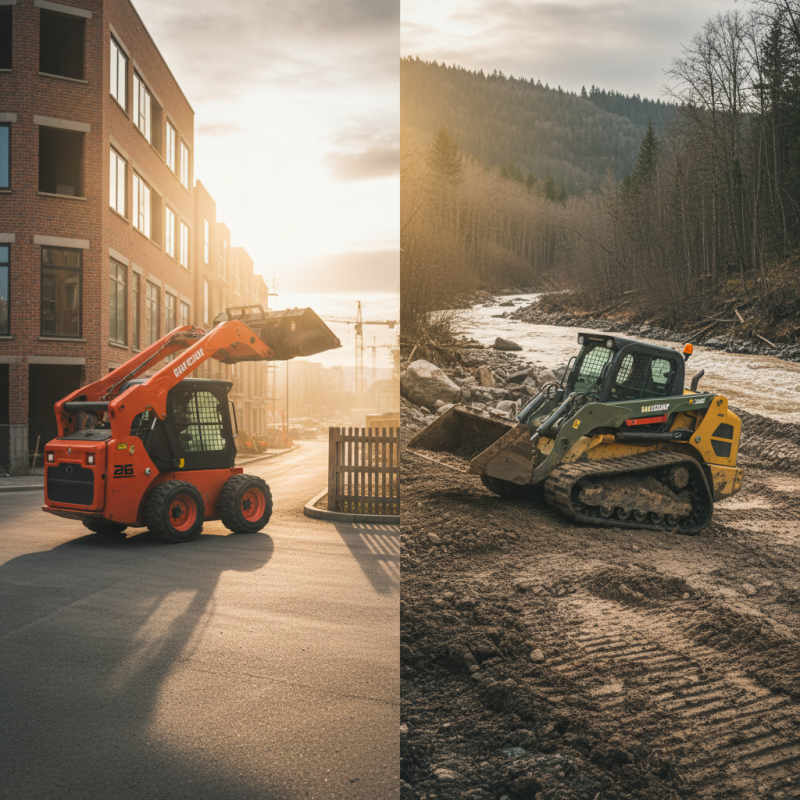
Skid steers are compact, agile, and ideal for smaller spaces. They excel in maneuverability and can easily switch attachments. On the other hand, track loaders offer superior traction on uneven terrain, making them perfect for muddy or rugged sites. This distinction is practically a game changer for contractors and operators.
When deciding between these machines, consider your project's demands. A skid steer might suit tight, urban work sites. However, if the terrain is challenging, a track loader could be advantageous. Both options have unique strengths. Reflecting on your needs can lead to a more informed decision, ensuring efficiency on the job site.
Advantages of Skid Steers in Versatile Applications
Skid steers are becoming increasingly popular in various applications due to their unique advantages. Their compact size allows them to maneuver easily in tight spaces. This is particularly beneficial for landscaping projects or jobs within limited overhead clearance, such as indoors or in small yards. Operators appreciate the visibility and control skid steers offer, enhancing safety and efficiency on the job site.
Another advantage lies in their versatility. Skid steers can easily switch attachments, making them suitable for tasks ranging from digging to lifting. For instance, in construction, they can seamlessly transition from moving soil to operating a snowplow. This adaptability can reduce the need for multiple machines, ultimately saving on costs and time. However, it’s important to note that while skid steers excel in versatility, they may struggle in very loose or muddy conditions compared to track loaders, which are designed for better traction.
While skid steers have many benefits, they might not be the ideal choice for every application. Their weight distribution can sometimes create vulnerabilities on soft ground. Operators must consider these factors carefully. Doing so can lead to more informed decisions and maximize the effectiveness of their equipment in various tasks.
Comparison of Maneuverability: Skid Steers vs. Track Loaders
When considering maneuverability, skid steers often have the edge over track loaders. Skid steers can pivot in tight spaces, making them ideal for small job sites. Their unique wheel-based design allows for sharp turns and quick directional changes. This is especially beneficial in urban environments with obstacles.
Track loaders, while powerful, may not navigate as easily around corners or confined areas. Their tracks provide stability but can limit agility. In muddy or wet conditions, they shine. However, their weight can create challenges on softer ground. The ability to maneuver quickly is vital for meeting project deadlines and efficiency.
Despite their advantages, skid steers come with a learning curve. Operators must adjust to their controls. Potential for tip-over exists, requiring caution. Understanding the strengths and weaknesses of each option is key to making an informed choice.
Cost Considerations: Skid Steers and Their Affordability
Skid steers are often considered a more affordable option compared to track loaders, especially for small to medium projects. A recent industry report highlighted that the initial purchase price of a skid steer can be up to 30% lower than that of a track loader. This cost difference makes skid steers attractive for small business owners and contractors.
Maintenance costs also play a significant role in the overall affordability of skid steers. On average, skid steers require less frequent maintenance compared to track loaders. Industry data indicates that operating costs for skid steers can be 15% to 20% lower over their lifespan. However, it’s essential to factor in potential extra expenses for attachments that may be needed for specific tasks.
Furthermore, while skid steers provide great flexibility, some users may find them less stable on uneven terrain than track loaders. This trade-off must be deliberated. Affordability should also consider the type of terrain and project scope. In specific environments, the cost savings from a skid steer may not outweigh the performance limitations.
Attachment Compatibility: Skid Steers Versus Track Loaders
When considering attachment compatibility, skid steers stand out against track loaders. Skid steers offer a versatile range of attachments that enhance their functionality. They excel in tight spaces, making them ideal for landscaping and construction. Their quick-attach system allows operators to swap out attachments with ease. This flexibility lets users adapt to various tasks quickly.
Track loaders have fewer compatible attachments, which can limit their use on some projects. They are designed for heavier loads and rough terrain, but their specialized attachments can be less efficient in urban settings. The limited compatibility can lead users to reconsider their choice, as this may hinder project efficiency. Also, the track loader’s weight can damage more delicate surfaces.
Injuries and maintenance can arise from mismatched equipment. Operators might find skid steers align better with their specific needs. Yet, some users may still prefer track loaders for their stability. Balancing the pros and cons of each machine’s attachments is crucial. Ultimately, the decision lies in the specific job requirements and the environment each machine will work in.
Maintenance and Operating Costs of Skid Steers Explained
When comparing skid steers and track loaders, maintenance and operating costs are crucial factors. Skid steers generally offer lower maintenance requirements. A study by the Association of Equipment Manufacturers indicated that skid steers can incur maintenance costs up to 30% less than track loaders. This is primarily due to their simpler design and easier accessibility to components.
Operating costs also favor skid steers in many scenarios. According to a recent industry report, skid steers consume about 15% less fuel than track loaders for similar tasks. This efficiency can lead to significant savings over time, especially in high-usage environments. The average fuel cost for heavy machinery is approximately $3.00 per gallon. Over a year, operating a skid steer can mean thousands of dollars saved at this fuel rate.
However, the decision isn't always straightforward. Track loaders may outshine skid steers in stability on uneven ground. Their larger footprints distribute weight better, which can be a crucial addition for certain projects. Skid steers, while cheaper to operate, may require more frequent tire replacements, especially on rough terrain. Proper evaluation of these factors can greatly influence long-term costs and reliability.
Maintenance and Operating Costs: Skid Steer vs. Track Loader
FAQS
: Skid steers can pivot in tight spaces. They allow for sharp turns and quick directional changes. This is ideal for small job sites.
Track loaders are stable but less agile. They struggle with corners or confined areas. They perform better in muddy or wet conditions.
Skid steers have a learning curve. Operators must adapt to their controls. Caution is necessary to prevent potential tip-overs.
Skid steers have more compatible attachments. They excel in landscaping and construction tasks. Track loaders offer less flexibility and fewer attachments.
Skid steers typically have lower maintenance costs. They can incur up to 30% less in costs than track loaders. Their design allows for easier access to components.
Skid steers consume about 15% less fuel. This translates to significant savings over time, especially with high usage.
Despite lower costs, skid steers may require frequent tire replacements. This can be a consideration for those working on rough terrain.
Operators should balance cost, maneuverability, and specific job requirements. Each machine has its strengths and weaknesses for different environments.
Conclusion
Choosing between a skid steer and a track loader often boils down to the specific needs of a project. One of the primary advantages of skid steers is their exceptional maneuverability, allowing them to access tight spaces that track loaders may struggle with. This makes them ideal for versatile applications where agility is crucial. Additionally, skid steers are generally more affordable, both in terms of initial purchase and operating costs, making them an attractive option for budget-conscious users.
When evaluating what is the difference between a skid steer and a track loader, it’s important to consider attachment compatibility, as skid steers typically offer a wider range of attachments, enhancing their usability across different tasks. Furthermore, maintenance requirements for skid steers are often simpler, which can lead to lower long-term operational costs. Overall, these factors make skid steers a preferred choice for many who prioritize flexibility and cost-effectiveness in their equipment.

 Plautz Excavator