Choosing an excavator for a residential pool is not simply a matter of selecting the biggest machine. The right choice depends on pool dimensions, digging depth, soil conditions, access width, spoil removal, and nearby structures. A 14-foot backyard gate can immediately eliminate several popular excavator models. Tight access matters.
So, what size excavator do I need for a residential pool? For many standard backyard pools, contractors often consider compact excavators between 3 and 8 metric tons. Smaller machines can enter narrow yards and reduce surface damage. Larger machines usually offer greater digging depth, lifting capacity, and faster production. However, extra size can create expensive problems near fences, patios, septic systems, or utility lines.
The EquipmentWatch Rental Rate Blue Book emphasizes that equipment selection should include ownership costs, operating costs, utilization, and job productivity. Caterpillar’s Performance Handbook also shows why soil type, bucket capacity, swing time, and loading conditions affect real output. These factors make a simple size chart unreliable. A machine may look powerful on paper but perform poorly in dense clay or restricted spaces.
Professional pool builders commonly confirm measurements before delivery. They check the narrowest entry point, overhead clearance, turning area, and truck access. They also identify underground services and plan where excavated soil will go. That step is easy to overlook. It should not be.
This guide shares five practical tips for matching excavator size to pool work. It also examines productivity, access, transport, ground protection, and operator experience. Local soil conditions can change the answer. A careful site assessment remains more dependable than a convenient rule of thumb.
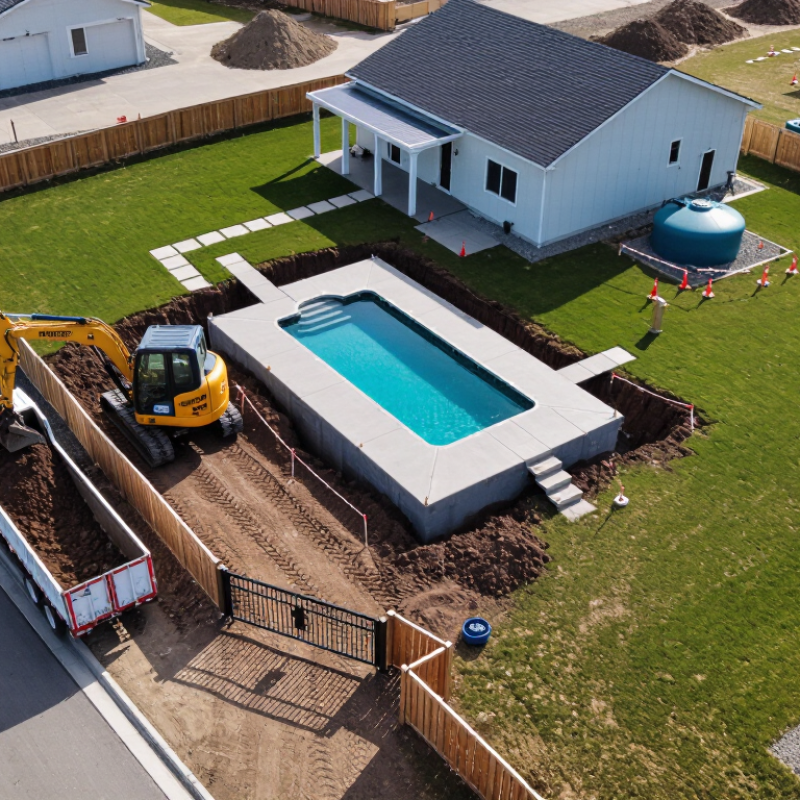
5 Tips What Size Excavator Do I Need for a Pool?
Estimate Excavation Volume: Add 12–24 Inches Around the Pool Shell
When sizing an excavator, measure the pool shell first. Then add 12–24 inches on every side for working clearance. This extra space allows room for bedding, drainage, plumbing, and safe positioning. For example, a 16-by-32-foot shell may require an excavation near 18-by-34 feet. Depth also changes the calculation. Include the shell depth, base material, and any required leveling layer.
Tip: Calculate length × width × depth. Add extra volume for sloped walls and uneven soil. My first estimate was too tight once, especially near the plumbing trench. Soil rarely behaves as neatly as a drawing suggests. Allowing more space can prevent rushed digging and costly hand excavation.
The right excavator size depends on access, ground conditions, and the amount of spoil removed. A compact machine may fit through a narrow gate, but it can work slowly in dense clay. A larger machine may dig faster, yet it needs more turning room and stronger ground support. Check the machine’s digging depth, bucket width, tail swing, and transport limits. Experienced operators should review the layout before digging. They can identify buried utilities, unstable edges, and areas needing temporary support. Local requirements may also affect setbacks and excavation safety.
| Pool Shell Size (Length × Width × Depth) |
Working Clearance Per Side |
Estimated Excavation Footprint (Length × Width) |
Estimated Excavation Depth | In-Place Excavation Volume (Cubic Yards) |
Recommended Excavator Class | Typical Minimum Access Width | Practical Use Notes |
|---|---|---|---|---|---|---|---|
| 12 ft × 24 ft × 4.5 ft | 12 in | 14 ft × 26 ft | 5.5 ft | 74 yd³ | 3–5 ton mini excavator | Approximately 7–8 ft | Suitable for compact residential sites when soil is stable and the digging depth is moderate. |
| 12 ft × 24 ft × 4.5 ft | 18 in | 15 ft × 27 ft | 5.5 ft | 83 yd³ | 3–5 ton mini excavator | Approximately 7–8 ft | The extra clearance allows more room for shell placement, drainage work, and spoil management. |
| 12 ft × 24 ft × 4.5 ft | 24 in | 16 ft × 28 ft | 5.5 ft | 90 yd³ | 3–5 ton mini excavator | Approximately 7–8 ft | Useful where wider working room is needed, but the larger footprint may increase disposal and restoration costs. |
| 14 ft × 28 ft × 5 ft | 12 in | 16 ft × 30 ft | 6 ft | 107 yd³ | 5–8 ton excavator | Approximately 8–10 ft | Provides better digging reach and lifting capacity for a larger shell and heavier or denser soil. |
| 14 ft × 28 ft × 5 ft | 18 in | 17 ft × 31 ft | 6 ft | 117 yd³ | 5–8 ton excavator | Approximately 8–10 ft | A balanced option for typical medium-sized pool excavation with adequate side access. |
| 14 ft × 28 ft × 5 ft | 24 in | 18 ft × 32 ft | 6 ft | 128 yd³ | 5–8 ton excavator | Approximately 8–10 ft | Consider this clearance for drainage, bracing, sloped sides, or difficult ground conditions. |
| 16 ft × 32 ft × 5.5 ft | 12 in | 18 ft × 34 ft | 6.5 ft | 147 yd³ | 8–12 ton excavator | Approximately 10–12 ft | The larger operating weight improves stability and productivity for deeper, wider excavations. |
| 16 ft × 32 ft × 5.5 ft | 18 in | 19 ft × 35 ft | 6.5 ft | 160 yd³ | 8–12 ton excavator | Approximately 10–12 ft | A practical choice when the site allows a larger machine and additional working space. |
| 16 ft × 32 ft × 5.5 ft | 24 in | 20 ft × 36 ft | 6.5 ft | 169 yd³ | 8–12 ton excavator | Approximately 10–12 ft | Allow additional planning for truck loading, spoil storage, utility protection, and site restoration. |
Many pools need about 7–12 feet of digging depth. Check the rated depth, not appearance. Maximum depth can shrink at full reach.
A typical pool may require 12–20 feet of reach. Measure from the excavator’s position to the far pool edge. A few inches can matter.
A 3–5 tonne excavator often fits compact backyards. Larger pools or dense clay may need 5–8 tonnes. Bigger is not always better.
Measure gate width, machine width, overhead branches, wall clearance, and turning space. Leave room for the machine to swing safely. Access decides more than expected.
Dense clay, gravel, wet ground, and loose sand can slow digging. Stronger buckets may help. Soft ground may require lower ground pressure.
Keep the spoil pile at least two feet from the excavation edge. Its weight can stress unstable walls. This detail is easy to overlook.
No. A large bucket removes soil quickly but may overload soft ground. It can also make spoil placement difficult. The estimate may be wrong.
Confirm utility locations and inspect nearby hazards. A qualified competent person should review the excavation. Protective systems may include sloping, benching, or shoring.
Reinspect after rain, vibration, or changing soil conditions. Loose sand and wet clay can collapse quickly. Stop and reassess if conditions look different.
Choosing the right excavator for a pool project starts with estimating the total excavation area, not just the pool’s finished dimensions. Allow approximately 12–24 inches of extra space around the pool shell for installation, drainage, and worker access. For most residential pools, a mini excavator in the 3,000–6,000-pound class offers a practical balance of digging power and maneuverability. What size excavator do I need for a residential pool? In many cases, this range is suitable, provided the machine can reach 7–12 feet deep and extend 12–20 feet across the excavation area.
Before renting or operating equipment, measure gates, driveways, and narrow access points. Compare those measurements with the excavator’s overall width, commonly around 36–48 inches for compact models. Finally, plan for soil stability, spoils management, and safe work practices. Follow OSHA 1926.651 requirements, keep workers away from unstable edges, and use appropriate protective measures based on soil conditions and excavation depth.

 Plautz Excavator