How to Ship Heavy Machinery Across State Lines in 2026?

Time:2026-11-05 Author:Aria
0%

Moving heavy machinery across state lines is not just a matter of finding a trailer and setting a delivery date. A 40-ton excavator, for example, may need a lowboy trailer, carefully measured clearance, secure tie-downs, and a route checked for bridge limits and tight turns. The right plan depends on the machine’s dimensions, weight, condition, and destination. Small details matter. A bucket left attached can change the load’s height; a last-minute route change can create new problems.

So, How to transport heavy machinery across state lines safely? Start with accurate equipment measurements, a qualified carrier, and a clear review of applicable state and federal requirements. Confirm permits, insurance, loading arrangements, and delivery access before the truck moves. Ask who will inspect the securement and how the carrier will handle delays or weather. Even a careful plan can miss something. That is why experienced operators verify key details again on loading day, rather than relying only on an earlier estimate.

A verified industry expert can make this guidance more useful. Add a sourced quotation before publication: “[Verified expert name]: ‘[Exact, verified quotation about planning and safe heavy-haul transport.]’” Do not present invented words as a real person’s statement. The practical lesson remains clear: measure twice, communicate early, and treat each shipment as its own planning exercise. Safe transport is deliberate.
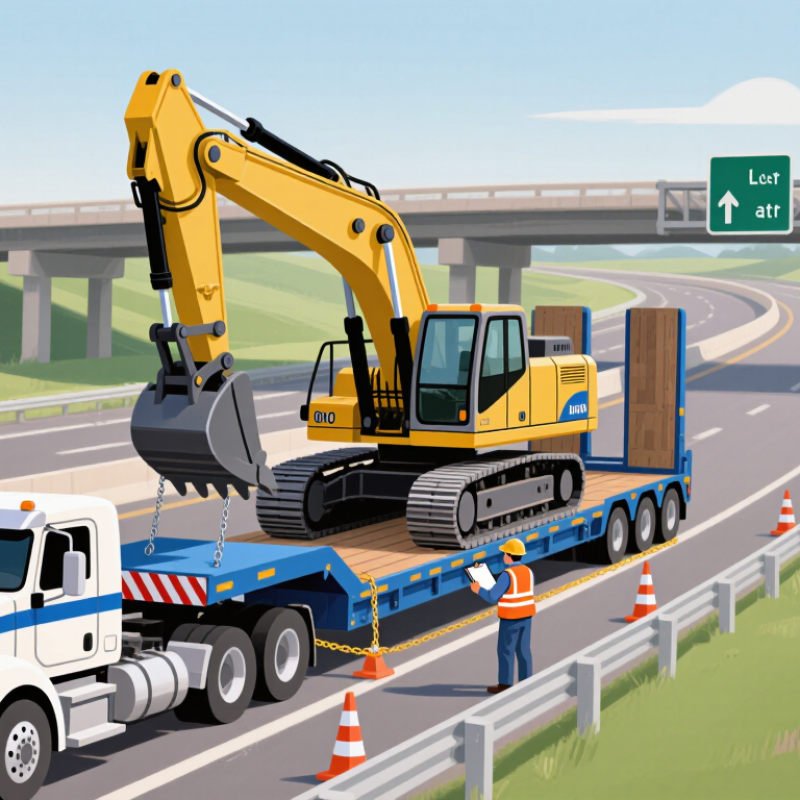
How to Ship Heavy Machinery Across State Lines in 2026?

Inventory the Machine’s Weight, Dimensions, Axle Loads, and Center of Gravity

Before arranging a heavy-machinery move across state lines, build a measured profile of the actual load. Record the machine’s operating weight, not just the figure in its manual. Fuel, attachments, counterweights, and loose components can change the total. A bucket left on the machine matters. Small errors travel.

Measure overall length, width, and height with the machine configured for transport. Include raised exhaust stacks, folded mirrors, and any attachment that cannot be removed. Write down each measurement and how it was taken. Then confirm the loaded height against the planned trailer and route clearances. A tape measure can sag, so recheck awkward points rather than trusting one quick reading.

Axle loads and center of gravity deserve equal attention. Ask a qualified carrier to verify how the machine will sit on the trailer, then use certified scale readings when available. The machine’s weight may be within a vehicle’s limit while one axle group carries too much. Note where the heaviest components sit, and whether counterweights or attachments shift the balance. This is an easy detail to underestimate, especially when equipment has been modified. Keep photos, measurements, and scale records together; if a number looks inconsistent, pause and verify it before the route and transport plan are finalized.

Check Interstate Baselines: 102-Inch Width and 80,000-Pound Gross Vehicle Weight

How to Ship Heavy Machinery Across State Lines in 2026?

For many standard vehicles on the Interstate System, the federal baseline is 102 inches wide and 80,000 pounds in gross vehicle weight. That is 8 feet 6 inches across. The weight includes the truck, trailer, machinery, and other load—not just the equipment. These figures are starting points, not automatic approval for every shipment. Axle weights, bridge limits, equipment dimensions, and state rules can change what is allowed. Oversize or overweight loads may need permits and an approved route.

Tips: Measure the machine at its widest point, including attachments that stay in place during transport. Weigh the loaded combination and check individual axle loads; an acceptable total can still hide an axle-limit problem. Confirm clearances along the planned route, including bridges, work zones, and low utility lines. Ask the carrier or permitting office to verify requirements in every state the shipment will cross.

Small measurement errors matter. A folded attachment may shift, and a tape measure can miss a protruding corner. Recheck before loading, then compare the figures with the permit documents. It feels repetitive, but assumptions are where plans get shaky. Keep measurements, load details, and route approvals together so the driver can review them before departure.

How to Ship Heavy Machinery Across State Lines in 2026? - Check Interstate Baselines: 102-Inch Width and 80,000-Pound Gross Vehicle Weight

Planning Dimension Interstate Baseline What It Means for the Shipment Practical Check Before Dispatch
Width 102 inches (8 feet 6 inches) is the general maximum width for vehicles on the federally designated National Network, subject to applicable exceptions. Measure the loaded vehicle, including the machinery and any attachments that count toward the vehicle’s width. A load wider than the applicable limit may require oversize permits. Confirm the permitted width and route rules with every state’s transportation agency. Check whether attachments can be removed or secured to reduce width.
Gross vehicle weight 80,000 pounds is the general federal Interstate System gross-weight limit, subject to statutory exceptions and applicable axle and bridge-formula limits. Gross weight includes the tractor, trailer, machinery, fuel, and other cargo—not just the machine’s shipping weight. Meeting the gross limit alone does not guarantee compliance. Obtain a scale weight for the loaded combination and check the rules for each axle group and each state on the route.
Axle and axle-group weight Common federal limits include 20,000 pounds on a single axle and 34,000 pounds on a tandem axle group, subject to the bridge formula and other requirements. A shipment can be below 80,000 pounds overall and still exceed a limit on an axle or axle group. Axle spacing affects allowable weight under the bridge formula. Use actual axle weights and measurements between axle groups. Confirm that the selected trailer configuration distributes the load legally.
Height There is no single nationwide maximum legal vehicle height that applies to every state and route. Legal limits and clearance restrictions vary. Bridges, tunnels, utility lines, and temporary construction conditions can make a route unsuitable for a tall machine. Measure the loaded height from the road surface and verify clearances along the exact route, including detours and destination access.
Length and trailer configuration Length rules depend on vehicle combination, road, and state requirements; federal rules establish certain minimum standards for designated routes. Long machinery, specialized trailers, and rear overhang can affect route eligibility, turning space, and permit requirements. Confirm combination length, overhang rules, escort requirements, and access at pickup and delivery locations with the relevant state agencies.
Oversize or overweight permits Permit thresholds, fees, travel times, escort requirements, and route restrictions are set by the states and may vary by jurisdiction. A permit issued by one state does not automatically authorize travel through another state. Permits may specify a particular route, dates, or operating conditions. Secure permits for every state and check that the authorized route, dimensions, weight, travel dates, and vehicle details match the actual shipment.
Route and load preparation Compliance depends on the complete loaded vehicle and the roads used—not solely on the machinery’s published specifications. Removable components, securement points, ground clearance, and loading position can affect dimensions, axle weights, and safe transit. Measure and weigh the final loaded combination, inspect securement, and reconfirm route conditions shortly before departure.
General interstate planning guidance for 2026. State laws, permit terms, route designations, and exceptions can change; verify requirements with the transportation agencies governing the shipment’s complete route.

Federal references: 23 U.S.C. § 127 (Interstate System weight limits and exceptions); 23 CFR § 658.15 (vehicle width); 23 CFR § 658.17 (vehicle weight). State-specific requirements may be more restrictive or may apply differently outside federally designated routes.

Plan a Route Around Bridge Limits, Clearances, and State-Specific Height Rules

Moving heavy machinery across state lines in 2026 starts with the loaded dimensions, not the catalog sheet. Measure from the road surface to the highest point, including exhaust stacks, folded booms, and temporary supports. Record width, length, axle weights, and the exact configuration. Small details matter. A machine lowered for loading may sit higher after its suspension settles.

Map the route against bridge postings, tunnel clearances, construction zones, and weight restrictions before requesting permits. Height rules and permit conditions can differ by state, so confirm the approved route with each state’s transportation department. A standard navigation app cannot verify a bridge’s condition or a permitted vehicle’s exact clearance.

Keep a buffer. A few inches can disappear when pavement is uneven or a trailer shifts. For complex routes, arrange a qualified route survey and check low wires, signs, and narrow turns in person. Carry the permit documents and current equipment measurements with the driver. Plans still miss things; road work can change overnight. Recheck restrictions shortly before departure, and identify safe stopping points where the vehicle can wait without blocking traffic.

Obtain Oversize/Overweight Permits and Required Escorts in Every State

For heavy machinery moving across state lines in 2026, permit planning starts with the load’s actual dimensions, gross weight, and axle configuration. Each state along the route may require a separate oversize or overweight permit. Local roads can add requirements, too. A permit is route-specific, not blanket approval. Check current rules with each state’s transportation department before booking the move, and carry approved permits in the truck. Details matter.

Escort requirements vary by state and permitted route. A permit may specify pilot-car numbers, vehicle positions, warning signs, lights, travel hours, or lane restrictions. Requirements can change with load width, length, road type, and visibility. Check bridge limits and overhead clearances, and arrange utility coordination when needed. A route can look clear on a map and still hide a low wire or tight turn. Confirm the exact route and every permit condition before departure; neighboring states do not always use the same standards.

Tips: Keep one route sheet with permit numbers, approved travel dates, escort contacts, and clearance notes. Ask the carrier to confirm escort placement against each state’s permit. Recheck the documents shortly before dispatch. Plans can miss small details. That final review is worth the time.

Secure the Load Under FMCSA Rules: Tie-Down WLL Must Equal 50% of Cargo Weight

How to Ship Heavy Machinery Across State Lines in 2026?

For interstate transport, tie-down strength is not a guess. Under FMCSA cargo-securement rules in 49 CFR 393.106(d), the aggregate working load limit (WLL) of tie-downs securing an article must be at least half its weight. A 20,000-pound machine therefore needs at least 10,000 pounds of qualifying aggregate WLL. This is the combined requirement, not a rule that every chain or strap must individually equal half the cargo weight.

Check each tie-down’s WLL marking and condition before loading. Count its contribution using the applicable securement method; simply adding every printed rating may give the wrong total. Position chains or straps to resist movement forward, rearward, sideways, and vertically. Secure loose attachments, and protect tie-downs from sharp steel edges with suitable edge protection. A machine that looks immovable can still shift when a trailer brakes hard. It is easy to trust a tidy number. That can be a mistake.

After securing the load, check that the machine is stable and the tie-downs remain tight. Recheck them during the trip, especially after the first stretch of travel and after rough roads. Keep the equipment’s weight and securement details available for the driver. Requirements can vary with the load and setup, so verify the full arrangement against current FMCSA rules before departure. A quick recheck takes little time. Skip it, and small slack can become a serious problem.

Minimum Aggregate Tie-Down WLL for Heavy Machinery

Under FMCSA cargo-securement rules (49 CFR § 393.106(d)), the aggregate working load limit (WLL) of the tie-downs used to secure an article must be at least 50% of the article’s weight. The examples below apply that threshold to different cargo weights.

FAQS

What measurements should I record before moving heavy machinery?

Measure the loaded height from the road surface to the highest point. Include exhaust stacks, folded booms, and temporary supports. Record width, length, axle weights, and the machine’s exact configuration. Details matter.

Do I need a separate permit for each state?

Often, yes. Each state on the route may require its own oversize or overweight permit. Permits are route-specific, so confirm approved roads, dates, and conditions with each state’s transportation department.

How can I check whether a route has enough clearance?

Check bridge postings, tunnels, overhead wires, signs, construction zones, and tight turns. A navigation app cannot confirm exact clearance or current bridge conditions. A few inches matter.

When should I arrange a route survey?

Consider a qualified survey for complex routes or loads with limited clearance. A survey can identify low wires, narrow turns, and safe stopping points. Road work can change overnight.

What escort details should I confirm before departure?

Check each permit for pilot-car numbers, positions, warning signs, lights, travel hours, and lane restrictions. Requirements may change between states and routes. Plans can miss things.

How much tie-down working load limit is required?

The combined working load limit of tie-downs must be at least half the cargo weight under applicable federal rules. A 20,000-pound machine needs at least 10,000 pounds of qualifying aggregate working load limit.

Can I simply add every tie-down’s printed rating?

Not necessarily. Count each tie-down’s contribution using the applicable securement method. Check its rating and condition, and use edge protection where chains or straps touch sharp steel.

What should the driver carry and recheck?

Carry approved permits, current equipment measurements, and securement details. Recheck tie-downs after the first stretch of travel and after rough roads. I would not assume a tidy load stays tight.

Conclusion

Shipping heavy machinery across state lines starts with accurate planning. Record the machine’s weight, overall dimensions, axle loads, and center of gravity so you can select suitable equipment and identify potential transport restrictions. Compare the shipment with common interstate limits, including a 102-inch width and an 80,000-pound gross vehicle weight, while remembering that state and route requirements may differ. Check bridge weight limits, overhead clearances, road conditions, and state-specific height rules before choosing a route.

To answer “How to transport heavy machinery across state lines safely?”, obtain the required oversize or overweight permits for every state along the route and arrange escorts when required. Secure the load in accordance with applicable FMCSA rules, ensuring the working load limit of the tie-downs totals at least 50% of the cargo’s weight. Recheck the machine, tie-downs, permits, and route details before departure, and monitor the load during the trip.

Aria

Aria

Aria is a dedicated marketing professional with a deep passion for innovative strategies and a keen understanding of our company's product offerings. With a wealth of experience in the industry, Aria excels at crafting engaging content that highlights the unique features and benefits of our......